

Divide your own hair into flat sections, spread the lengths around the sides and back of your head, and pin or tuck the ends where they won’t sit under a cap edge. Try the wig on, then check the crown and nape in a second mirror. If the back edge rides up, take the wig off and feel for a braid tail or a knot directly beneath it.
Two low braids are a practical starting point when you can lay them side by side. If they form a ridge even when you’ve spread them out, divide your hair into more sections so each braid is thinner. You can also use flat wraps or twists if they lie comfortably on your head.
Choose a base that fits your hair
Start with dry hair. Use your fingers to feel where the thickest part of each section sits. The length matters because you need room for the ends. The thickness matters because it determines how high each section sits once it’s pinned.
| Your hair and what you notice | Try this base | Check before fitting the wig |
|---|---|---|
| Long hair that lies smooth when wrapped | Divide it into two broad, flat sections. Sweep them around the back in opposite directions and pin the ends separately. | Each section should lie like a flat strip of hair. If it gathers into a rope at the nape, try braiding or dividing it further. |
| Long hair that’s easier to control in braids | Make two low, comfortable braids and lay the tails along separate areas of the back and sides. | Feel where the tails cross or double back. Move them apart if that spot feels thicker than the braid beside it. |
| Dense, curly or coily hair that still makes a ridge in two braids | Use more, narrower flat sections. Loose flat twists or low-tension cornrows can help if those methods suit your hair. | Space the ends across the back and sides. Release any section that pulls at the roots. |
The National Alopecia Areata Foundation’s fitting guide recommends creating a flat base so a wig can sit evenly. For thick or long hair, judge the result by touch and by how your particular cap sits over it. NAAF wig fitting guide
Lay two braids flat without piling up the ends

- Part your hair down the back. Make two low braids with enough slack at the roots to move your head comfortably. If a braid is already bulky where it starts, divide that side into smaller sections before you pin it up.
- Follow the curve of your head. Lay one tail across the back and around the lower side where there’s room. Place the other along a separate path. If both tails reach the same spot, shift one to a neighboring area so they don’t sit directly on top of each other.
- Keep the thickest sections clear of the edges. Leave room around the ears and at the nape where the wig’s lower edge will rest. Keep the front hairline smooth as well. If you use flat hairpins, slide them into your own prepared hair and feel for any tip that presses against the scalp. Check where your wig’s built-in clips will land and leave suitable hair accessible there.
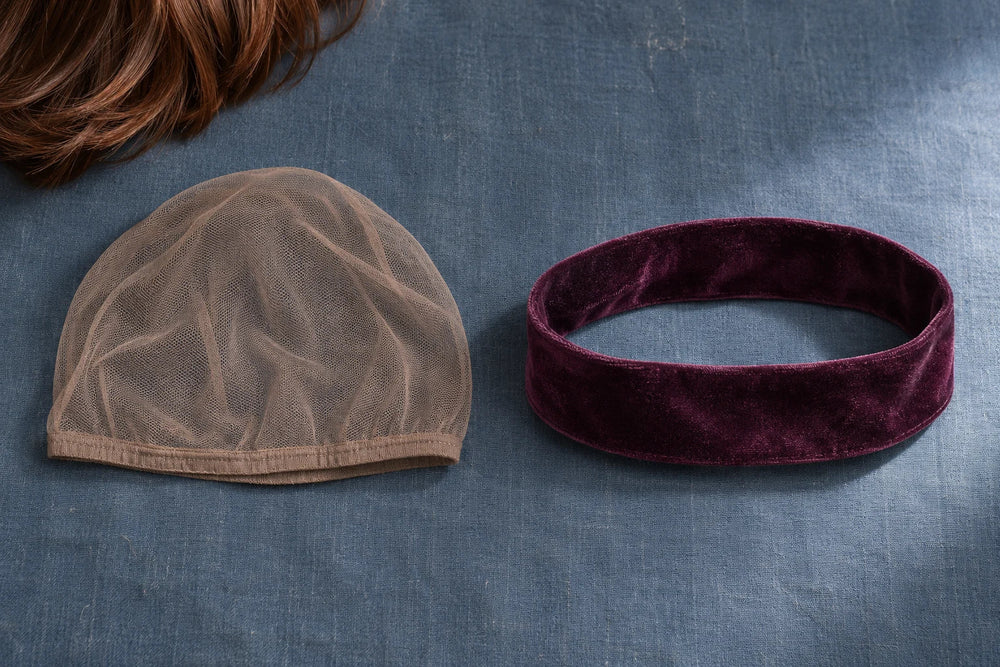
- Feel the base before you cover it. Run your palm over the crown, sides and back. If you can feel a bump, move the hair beneath it while everything is still visible. A separate wig liner can contain loose ends once the base is flat.
If your long hair slips out of a wrap as you pin it, switch to loose braids. If your braids keep making a raised line, make thinner sections and give the tails more room. A persistent tug at the hairline is a cue to loosen the base before you go on. The American Academy of Dermatology advises loosening styles that pull, especially braids around the hairline. AAD guidance on hairstyles that pull
Try it on and see what moves
Place the front of the wig at your hairline and ease the cap over the crown toward the nape. Center the sides before fastening. Turn your head, look down, then look back in the mirror and check whether either edge has shifted. See the full fitting sequence in our first-time wig tutorial.

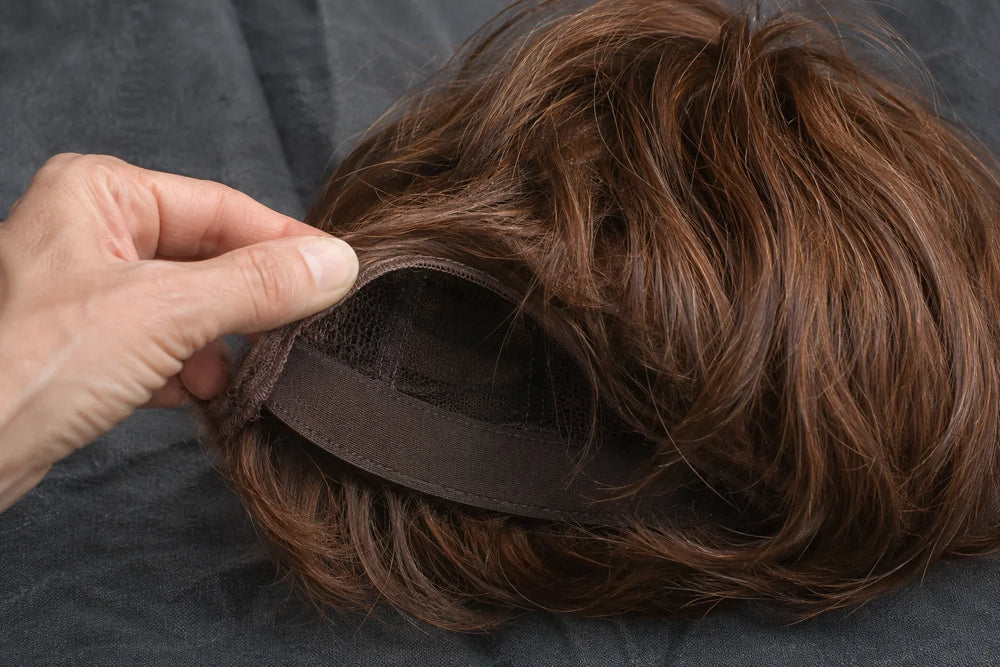
- The crown looks raised in one spot. Lift the wig off and feel for stacked hair directly under the raised spot. Move the overlapping sections apart and try the same wig again. If the base feels smooth and the shape stays the same, compare the wig’s own crown shape and cap depth.
- The back edge creeps up when you look down. Check for a braid end, a thick tie or a folded liner at the nape. Move the hair just above or away from the edge and retest. If the front and nape still won’t sit in place together, check front-to-nape fit.
- A clip tugs or an ear area feels pinched. Release the clip and check for a trapped braid, hairpin or folded liner. Reposition it only where it can hold suitable hair comfortably. If you still can’t get a comfortable hold, choose a different fastening or cap fit.
Change one thing at a time. For instance, if you move a braid tail and the nape now sits correctly with the same wig, you’ve found a preparation change that works. If the cap still shifts or squeezes after the hair lies flat, measure with the hair arranged as you’ll wear it. Compare circumference, front to nape and ear to ear over the top using our wig size chart.
EWIGSC’s full synthetic wigs use clips that need suitable natural hair at the attachment points. For everyday wear with a liner, check whether the clips can still reach those points comfortably. For a brief return-eligible EWIGSC fit check, use a clean protective wig cap and follow the return policy.
Questions about long hair under a wig
Can I put long hair in a low bun under a wig?
Yes, if it lies flat enough for the cap edge to sit in place and stays comfortable when you move. Put your hand over the bun before fitting. If you feel a firm knot where the back edge will sit, undo it and spread the hair into flat sections.
Can I wear a short wig over long hair?
Yes, if the cap fits over the prepared hair. A cropped pixie can leave the nape and ears more exposed, so turn your head and check for visible ends from both sides and the back. Give any escaping end its own flat path under the cap.
Do I need a separate wig cap for long hair?
A liner is optional for everyday wear if your hair stays contained and your wig fits and fastens comfortably. A liner can help with loose ends. If it rolls into a ridge or interferes with a clip, reset it and check the fit again. Our wig cap and grip guide explains what each accessory does.
What if my hair is already in box braids or locs?
Lay them in separate paths along the head and try the wig over that arrangement. If the braids or locs remain too bulky for the front and nape to sit in place together, compare a cap with room for that base or choose a different hair arrangement. Take the wig off if the fit pulls at the roots or feels painful.
References & Sources
- National Alopecia Areata Foundation: How to Put On a Wig. Preparing a flat base and checking wig placement.
- American Academy of Dermatology: Hairstyles that pull can lead to hair loss. Signs of excessive pulling and advice on loosening braids.
0 comments