

A glueless wig is designed to be worn without bonding it to your skin with wig glue or tape. It stays on through a combination of cap fit and the features built into that particular wig. Clips or combs can anchor into your own hair. An elastic band can help hold the cap close, and some caps use silicone strips for grip.
Before buying, ask to see the inside of the cap. If the wig depends on clips, check whether you have enough hair where they close. If it depends on a band or grip surface, check the manufacturer’s fit instructions and size range for that design.
How glueless wigs stay on
The cap sits over the shape of your head and any hair you wear underneath. Its size and depth determine where the front, sides, and back edge land. The fastening features then help hold it in that position. Two wigs with the same “glueless” label can fit and fasten quite differently. The National Alopecia Areata Foundation’s Wig 101 materials illustrate several adhesive-free cap designs. NAAF Wigs 101, pages 6–7
Two pieces of hardware are easy to mix up in a product photo. In this generic cap illustration, the elastic band on the left spans the opening. The nape adjusters on the right are short tabs along the back rim. Use those positions to tell them apart when you shop.

| What you see inside the cap | What it does | What to check before buying |
|---|---|---|
| Snap clips | Close around sections of your own hair to hold the cap at those points. | Check whether there’s enough hair where each clip will land. A clip that can only reach a sparse or tender spot may be a poor match. |
| Built-in combs | Slide into the prepared hair and hold where the teeth have something to catch. | Check the comb locations and whether your hair can support them comfortably. Ask how the maker intends the combs to be used. |
| Elastic band | Sits against the head and helps hold the cap close. | Check the band’s position, whether it adjusts, and what head sizes the cap is designed to fit. |
| Nape adjusters | Take up slack around the lower edge when the cap has an adjustable perimeter. | Look for a comfortable fit at the loosest useful setting. Check front-to-nape depth as well as circumference. |
| Silicone grip strips | Add friction where the cap is designed to make contact. | Check where the strips sit and whether the maker describes that cap as suitable for your amount of hair or direct scalp wear. |
Some caps have both parts. If the lower rim feels loose, start by checking the nape adjustment. If getting the back edge into place pulls the front away from your hairline, check front-to-nape depth before adding tension.
Check whether the fastening matches your hair
If you have hair at the attachment points, a clip-fastened wig can be a straightforward option. Look at where the clips will land once the wig is centered. A clip that can grip a suitable section without dragging at the roots is more useful than one that needs to be closed over the nearest hairs simply to keep the wig in place.
If you have little or no hair where the clips would land, look for a cap designed to stay on without anchoring into hair. Ask which feature supplies the hold, where it contacts your head, and what fit range the maker specifies. Some designs use a fitted cap, a band or silicone contact surfaces. If you’re shopping for coverage because of hair loss, compare the fastening options in our wig guide for alopecia.
EWIGSC’s full synthetic wigs use clips that close on suitable natural hair. They have pre-cut lace, so the front edge comes trimmed. All eight use the same listed cap dimensions: 21.5 in around, 14 in front to nape, and 13.25 in ear to ear over the top. Compare those cap measurements with the wig size chart and measuring guide as you check fit.

8-inch Auburn Brown Blunt Bob
$158 USD · Pre-cut lace · Clip fastening
A straight, chin-framing option if you have enough hair where the clips close and want to skip trimming the front lace.
Shop the Auburn Blunt BobWhat do “pre-cut lace” and “lace front” tell you?
Glueless describes how the wig is designed to stay on. Pre-cut lace describes preparation. The lace at the edge has already been trimmed. Lace front describes the construction at the front hairline. A product can have all three features, so read the fastening and hairline descriptions separately.
If a listing mentions pre-cut lace, look for the attachment instructions as well. Those instructions tell you whether the manufacturer expects you to use a band, fasten clips, or apply an adhesive. For a style you plan to wear swept back, ask for a front and side view with the hair off the face.
Make a brief fit check
Start with your hair arranged the way you’ll wear it under the wig. Set the front edge where you want it to sit, center the sides, and bring the back to the nape. If your wig has ear tabs, check that they sit evenly. Secure the wig as the maker directs and turn your head gently. Then look down and check whether the front, sides or back have shifted. NAAF fitting guide
If a clip pulls, open it and check the hair underneath. If a band presses painfully, loosen it and check whether the cap can sit in position comfortably. When the wig still shifts at a comfortable setting, compare the cap measurements and the fastening method. If the wig is new and you might return it, follow the seller’s trial and return instructions before making changes. See the complete first-time wig fitting guide for the fitting sequence.
Common questions about glueless wigs
Does a glueless wig need a wig grip or liner?
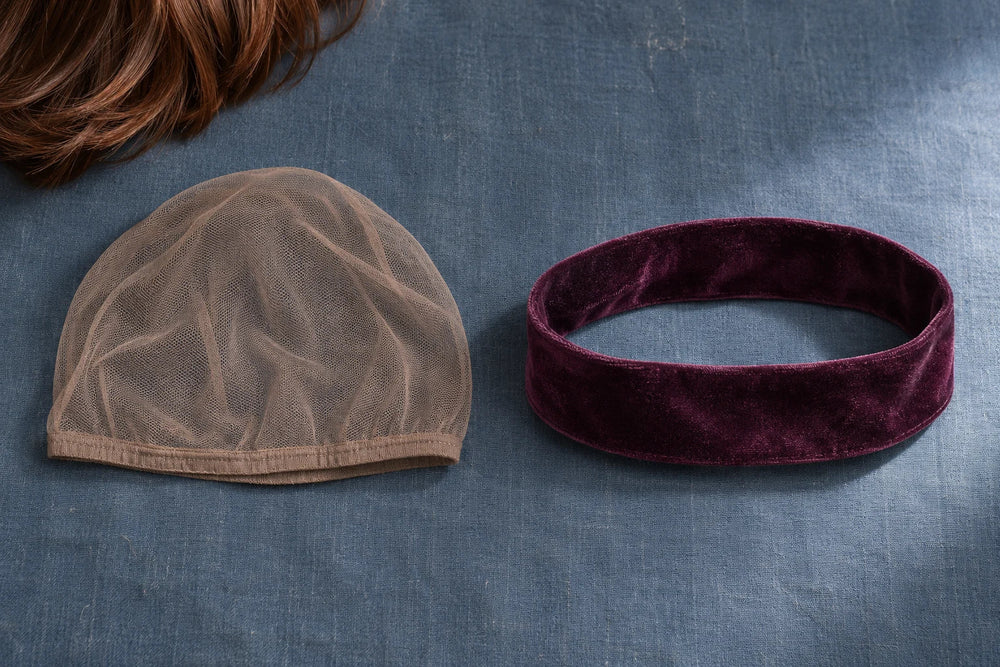
It depends on the cap and how it fits. A liner can help contain your hair. A grip band can add friction, but its position matters if the wig’s clips need to reach your natural hair. Start by identifying the built-in fastening, then decide whether you need either accessory. Compare a wig grip with a wig cap
Why can the lace lift when the wig feels secure?
First see whether the cap moves with the lace. If the cap stays put and one corner lifts, compare where the two ear tabs sit, if your cap has them. If one is farther forward, take the wig off and re-center it. If the whole front edge lifts, reset the lace at your intended hairline and see whether the back still reaches the nape comfortably. Try this with the hair swept back if that’s how you plan to wear it.
If the whole wig shifts when you turn your head, check cap fit and how the fastenings engage before adjusting the front edge.
Can a glueless wig be synthetic?
Yes. Glueless describes attachment, and synthetic describes the hair fiber. You can find glueless designs made with synthetic or human hair. After checking how the wig stays on, choose the fiber and style based on how you want to wear and care for it.
References & Sources
- National Alopecia Areata Foundation, Wigs 101 webinar slides. Examples of cap designs and pre-cut lace.
- National Alopecia Areata Foundation, How to Put On a Wig. Placement, optional grips, and fit checks.
0 comments