

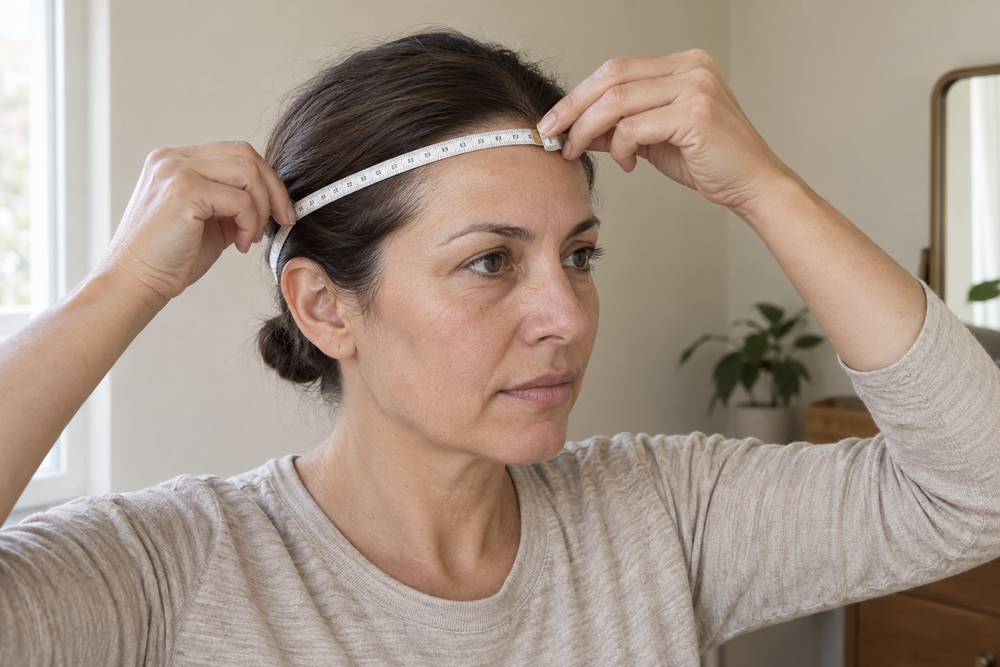
EWIGSC’s eight full wigs share these cap dimensions: circumference 21.5 in (54.6 cm), front to nape 14 in (35.6 cm), and ear to ear over the top 13.25 in (33.7 cm). These describe the wig cap, not a minimum-to-maximum head-size range. Measure your head along the same three routes and use a comfortable fit check.
The Petite, Average and Large table later on this page is a general reference from the American Cancer Society. Those are not three EWIGSC sizes available to select.
EWIGSC specifications for our eight full wigs
The table below records the shared product specification for our eight full-wig styles, including the cuts in our bob wig collection.
| Product specification | Inches | Centimeters | Measurement path |
|---|---|---|---|
| Circumference | 21.5 in | 54.6 cm | Around the cap edge |
| Front to nape | 14 in | 35.6 cm | From the front cap edge over the top to the back edge at the nape |
| Ear to ear over top | 13.25 in | 33.7 cm | From one ear position over the top to the other; the cap-depth measurement in our specification |
These are product specifications, not a published wearer head-size range. Fit also involves cap stretch, adjustment and the hair worn underneath. For a 22-inch head, the 21.5-inch product circumference alone cannot confirm fit; use all three head readings when obtaining a fit recommendation before ordering. Do not add an assumed allowance to turn this specification into a larger range.
Which EWIGSC styles use these dimensions?
- Black 3.5-inch cropped pixie
- Pastel Blonde 4-inch layered pixie
- Pearl Blonde 7-inch curly bob
- Auburn Brown 8-inch blunt bob
- Beige Blonde 8-inch classic bob
- Champagne Blonde 8.5-inch layered bob
- Platinum Blonde 9-inch loose curly bob
- Auburn Brown 13-inch straight lob
General wig cap size chart
These figures come from the American Cancer Society’s wig-size reference. Centimeters are converted from inches and rounded to one decimal place.
| Reference size | Circumference | Front to nape | Ear to ear over top |
|---|---|---|---|
| Petite | 21 in (53.3 cm) | 13.375 in (34.0 cm) | 12.875–13 in (32.7–33.0 cm) |
| Average | 21.5 in (54.6 cm) | 14.5–14.75 in (36.8–37.5 cm) | 13.375 in (34.0 cm) |
| Large | 23 in (58.4 cm) | 14.875–15.25 in (37.8–38.7 cm) | 13.875 in (35.2 cm) |
Use this table to understand the size labels. Its circumference figures are individual reference points, so the gaps between them do not define a continuous fit range. For a purchase, use the chart supplied for the particular wig.
How to read a wig size chart
1. Find a starting size from circumference
Locate your head circumference in the chosen brand’s chart. When the chart lists wearer ranges, find the range containing your reading. If it gives single reference numbers, identify the closest entry, then check the brand’s fit guidance before treating it as your size.
If your head measures 22 inches (55.9 cm): the general table above places you between its 21.5-inch average and 23-inch large reference points. Average is the closer starting comparison. Next, check whether the particular brand’s average fit range includes 22 inches and compare its other two dimensions. If 22 inches falls outside that range, compare another size or cap; stretching the smaller cap is not a sizing plan.
2. Check front-to-nape length and over-top width
Compare each reading with the matching column. Front to nape checks coverage along the center of your head; ear to ear over the top checks coverage across it. A circumference match can still leave a cap short from front to back or roomy at the crown.
Keep the measurement routes consistent. Ear to ear along the front hairline follows a different path from ear to ear over the crown. If your record is missing a reading, our head measurement tutorial shows all three routes.
3. Resolve readings that point to different sizes
Repeat the reading that points to a different size, with the same hair arrangement and endpoints. If it stays the same, compare the cap proportions across sizes. The National Alopecia Areata Foundation’s fitting guidance generally favors the slightly larger option between sizes. Apply the chosen maker’s sizing instructions and adjustment limits when making that choice.
The important comparison is which reading needs the larger size category. Circumference is usually the largest number on the tape, but a front-to-nape reading can be the dimension that requires more room.
A worked example using the reference chart
This hypothetical set of head measurements shows why all three readings matter:
| Head measurement | Example reading | Reference-chart comparison |
|---|---|---|
| Circumference | 21.5 in (54.6 cm) | Matches the average reference point |
| Front to nape | 15 in (38.1 cm) | Falls within the large reference’s 14.875–15.25 in interval |
| Ear to ear over top | 13.375 in (34.0 cm) | Matches the average reference point |
The front-to-nape reading needs more length than the average reference provides. Compare the larger cap’s full specification, including its circumference, before choosing it. If the added circumference would be too roomy, look for another cap shape or a fitter’s assessment. Do not average the three readings or assume a larger label solves every proportion.
Check fit with the cap in position
Prepare your hair as you did when measuring. Position the front edge, sides and back using our wig placement guide, then check:
- Front and nape: both reach their intended positions without pulling one end away to seat the other.
- Sides: the ear positions are even, with the edges clear of your ears.
- Crown and back: check for persistent bunching, empty space or a cap that keeps riding up after you correct its placement and flatten the hair underneath.
- Movement: turn your head normally. A cap that shifts or causes uncomfortable pressure needs another fit check. Remove it if it hurts.
For an EWIGSC fit check, use a clean protective wig cap and preserve the piece in its original condition. Keep lace, tags, packaging and accessories intact, and follow our return conditions before washing, cutting or styling.
Questions about wig sizing
Does “wig cap size” mean the size of a wig liner?
In this chart, it means the foundation of the wig that holds the hair. A separate wig liner worn underneath has its own sizing. Measure with the liner you intend to wear so your setup stays consistent.
Does EWIGSC offer separate petite, average and large versions?
The eight full-wig styles covered here share the single specification above. Our pixie wigs use that same specification; choosing a closer crop does not select a different cap size.
Does a shorter wig have a smaller cap?
Hair length and cap size describe separate parts of a wig. In our short wig collection, cropped pixies and short bobs share the stated cap dimensions. Use cap measurements for fit and the wig length guide to compare where the front, sides and nape of the haircut fall.
Keep the chart with your measurements
Record your candidate size beside the exact style and chart you used. If another measurement points elsewhere, resolve that mismatch before ordering. Keep the same hair and liner setup for your try-on so you can judge the cap in the conditions you measured for.
References & Sources
- American Cancer Society: Wigs for Hair Loss — general reference chart; the worked example uses those values.
- National Alopecia Areata Foundation: Wigs and Toppers — measurement roles and general between-size guidance.
- EWIGSC product specifications, confirmed October 26, 2026, for the eight full-wig styles.
- EWIGSC Exchanges, Returns & Refunds — fit-check and return conditions.

0 comments