

Start with a wig cap if loose hair keeps escaping from under your wig. Try a wig grip if your hair already lies flat and the wig slides even though it fits comfortably. If your wig sits where you put it and feels good, skip both. When you have loose hair and a sliding wig, solve the hair problem first. You may find that one layer is enough.
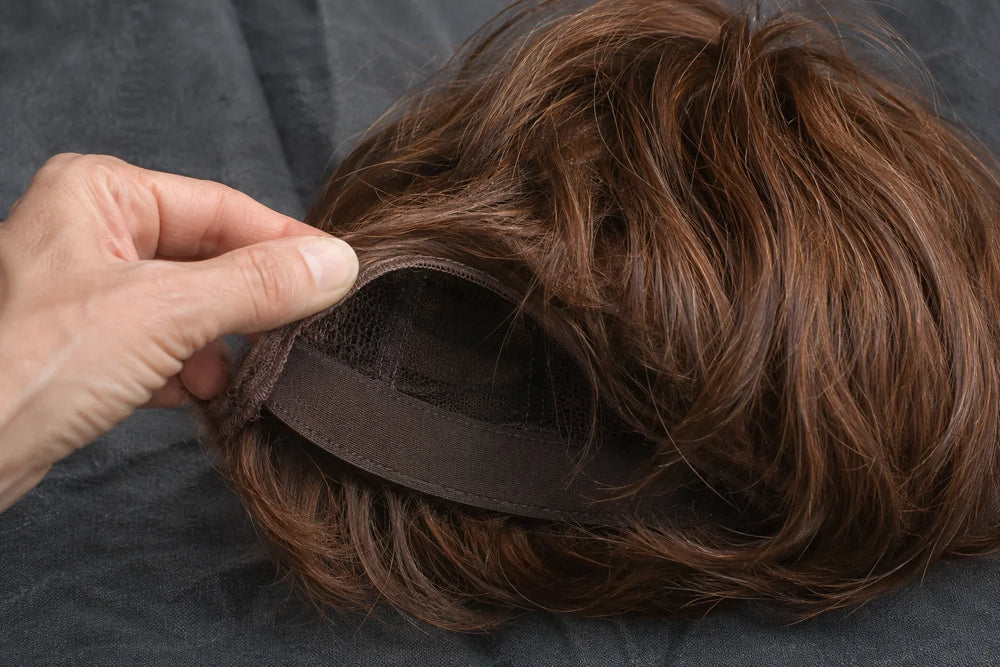
A wig cap can also mean the sewn-in base that holds the wig fibers. Here, it means the removable cap you put on underneath, sometimes sold as a stocking cap or liner.
Which layer solves your problem?
| What you notice | Start with | What to check before you keep it |
|---|---|---|
| Loose strands escape around the sides or nape. | A thin stocking cap or mesh liner over hair arranged flat. | Your hair stays tucked and the liner rim lies flat instead of rolling. |
| Your hair stays in place, but the wig creeps back from the hairline. | A grip band, once you've checked that the wig fits comfortably on its own. | The band lies flat and the wig still sits at the intended hairline. |
| The inside of the wig rubs against your scalp. | A thin, soft liner. | The extra layer feels better and the wig still sits steadily. |
| The wig and the layers underneath already stay put comfortably. | Keep your current setup. | The wig sits evenly at the sides and nape when you turn your head or look down. |
| The wig feels tight, rocks, or gaps with your hair already flat. | Recheck the wig's fit. | Compare your measurements with the wig size chart before adding anything underneath. |
A stocking cap covers the crown, so it can gather loose strands across the head. A grip band goes around the perimeter and leaves the crown open. That difference matters if the back feels bulky. Spread your hair flatter first. A band won't move a bundle of hair away from the nape.
Check which edge moved
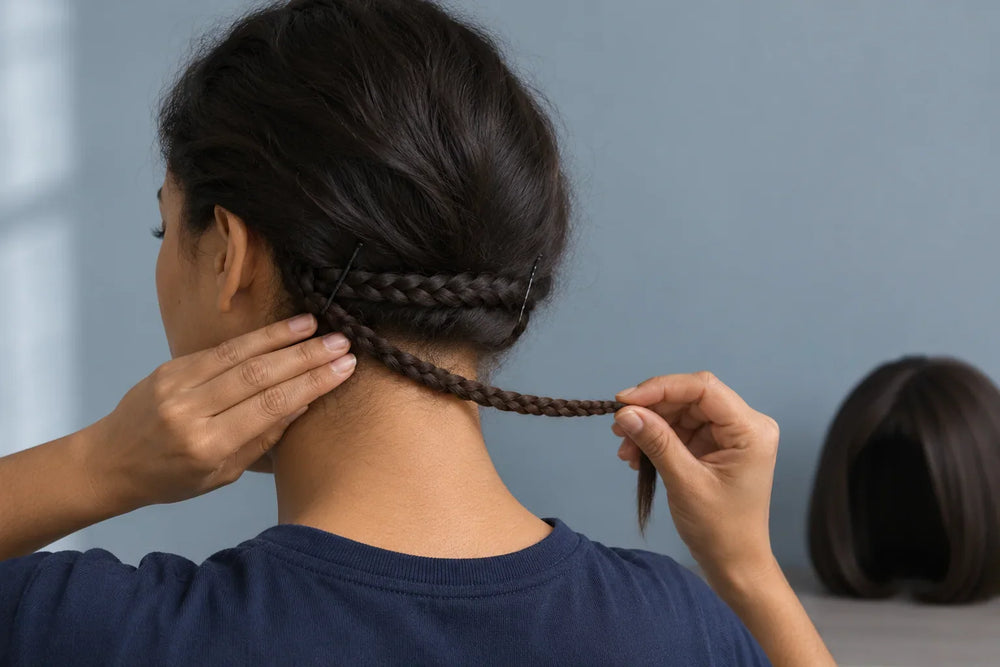
Put your wig on at home with your usual hair arrangement. Take note of where the front edge sits and how the sides feel above your ears. Turn your head gently, then look down and back up. If something shifts, take the wig off carefully and look at what happened underneath.
- The liner rim rolled or hair came loose. Reset the hair and smooth the rim flat. If the same edge keeps rolling, try a different liner fit or skip the liner if your hair stays flat without it.
- The band slid or twisted. Refit it in the position and orientation shown in its instructions. Check that it sits flat and feels snug without pressing. If it still moves, try the wig without the band and compare the two setups.
- The liner or band stayed put, but the wig moved. Check how the wig sits at the sides and nape, and use its intended fastening method. A second accessory won't fix a clip that's blocked by fabric or a wig that's the wrong size.
Change one thing before repeating the check. For example, if your liner keeps the nape tidy but your wig slides back, keep the liner where it was and compare the fit with and without a band. If the front now sits higher or the sides press into your temples, the extra layer is getting in the way.

Leave room for the clips to reach your hair
EWIGSC's synthetic full wigs, including the 8-inch Auburn Brown blunt bob, come with pre-cut lace and clips for adhesive-free wear. Before putting the wig on, look at where each clip will land. The clips need to reach your own hair where they close. A liner can keep the rest of your hair tidy and still cover the spots the clips need.

Try laying your hair flat and fitting the wig without the extra layer. If you add a liner or band, keep it only if the clips still reach suitable hair and close comfortably. If you feel a pinch or tug, open the clip and reposition the wig. For the full fitting sequence, see how to put on a wig for the first time.
When wearing both makes sense
Use both only if you can point to a separate job for each. The cap keeps hair inside and the band helps with movement around the perimeter. Follow the band’s instructions for placement and which surface it should contact. Before going out, check the front edge in daylight and feel behind both ears and at the nape for a ridge or pressure.
The National Alopecia Areata Foundation treats a grip as optional and recommends wearing it flat and comfortably snug. A thin liner can also help when the inside of the wig feels scratchy. Macmillan Cancer Support suggests trying a thin cotton liner for that purpose and notes that it can make the wig move more. Check comfort and movement together when you try one.
A few things you might notice when you try it on
What if the grip shows through the lace or at the part?
Check the front and part in daylight. If the band edge or a seam shows, refit the band within its intended position and see whether the edge disappears. If hiding it means shifting the wig off your hairline, leave the band off or try a grip designed for the lace placement on your wig.
Is a one-piece grip cap the same as wearing both?
A one-piece grip cap combines crown coverage with a grip around the edge. It can simplify getting dressed if you need both functions. With two separate pieces, you can take one off or reposition it independently. Check clip access and the front edge with either design.
What should I wear underneath if I have little or no hair?
If your wig already holds comfortably on its own, you may only want a soft liner where the inside rubs. If there’s too little hair for clips to hold comfortably, choose a wig designed for a fastening method that works without relying on your hair. The wig guide for alopecia explains those options by coverage and attachment.
If you have hair where the clips will land and you're shopping for a pre-cut style, browse EWIGSC synthetic wigs after checking your measurements.
References & Sources
- National Alopecia Areata Foundation — How to Put On a Wig. Hair preparation, optional grip placement and fit checks.
- Macmillan Cancer Support — Wigs for Cancer Treatment. Thin cotton liners for comfort and their possible effect on movement.
0 comments