

For EWIGSC’s 18-inch, 110 g clip-in, your own hair must cover the full base and blend with its soft wave. A longer back section alone is not enough.
Published clip-in guidance often starts around 3–4 inches (7.6–10.2 cm) of natural hair. Use that as an initial reference, then check the covering layers above and beside the intended attachment.
| Your hair now | Practical decision | Next step |
|---|---|---|
| The released top layer covers the full base, your ends blend with the wave, and the clips sit comfortably | This single piece is worth considering for added back-of-head length or body | Compare the 18-inch wavy clip-in with your hair |
| The back is longer, but short side or crown layers leave the outer clips visible | Wait before choosing this piece; more length at the back will not conceal exposed side attachments | Check the short covering layers and let those sections grow |
| You have a cropped pixie or about 2 inches of hair, cannot cover the base, and want a complete hairstyle now | Consider a full wig for the new silhouette, with its own cap-fit check | Choose pixie wigs for a cropped shape or bob wigs for a bob outline |
If you are choosing synthetic clip-in hair extensions, compare the base and finished length with your covering hair. EWIGSC’s 18-inch wavy single piece is a wide, approximately 110 g extension for the back of the head. A very short cut that needs several separately placed pieces through the sides is a poor match for this construction.
Minimum hair length for extensions: a practical comparison
The attachment method changes how much natural hair is needed. Published starting lengths also describe different goals: securing an attachment, hiding it, or producing a finished blend.
| Extension method | Published starting guidance | What still needs checking |
|---|---|---|
| Clip-ins | About 3–4 in (7.6–10.2 cm) in general retailer guidance | Enough hair above every clip to conceal the base; ends that merge with the added hair |
| Tape-ins | About 4–5 in (10.2–12.7 cm) in the method guide cited below | Coverage around the tapes and suitability for professional fitting |
| Nano rings or nano bonds | From about 3 in (7.6 cm) in the same guide | Individual hair condition, attachment placement and the amount of length being added |
| Halo extensions | Shoulder-length hair in that guide | Hair that falls over the wire and blends around the sides |
These figures summarize Cliphair’s method-specific length guide; they are not EWIGSC product minimums. Inch-to-centimeter conversions are rounded. A strand measured from its root is also different from a hairstyle described as “chin length”: the starting point on the head matters.
More length can make blending easier. For example, Denver HairDaddy’s salon guidance distinguishes a general 3–4-inch starting length from its preferred 5–6 inches for blending. That difference helps explain why meeting a minimum does not settle the purchase decision.
Once you have narrowed the options to methods that suit your cut, compare the full commitment. A removable clip-in purchase and a salon-fitted installation pay for different things; the latter also involves follow-up services. Our hair extension cost guide separates the hair, fitting and ongoing costs so you can budget for the method you are actually considering.
Check the hair that will cover the attachments
Before choosing extensions, measure the sections that will hold and cover them. Measuring only the longest strand at the back can miss the short layers that expose a clip.

- Start with dry hair in your usual part. Let it sit as you normally wear it, so you can see which sections will fall over the extension.
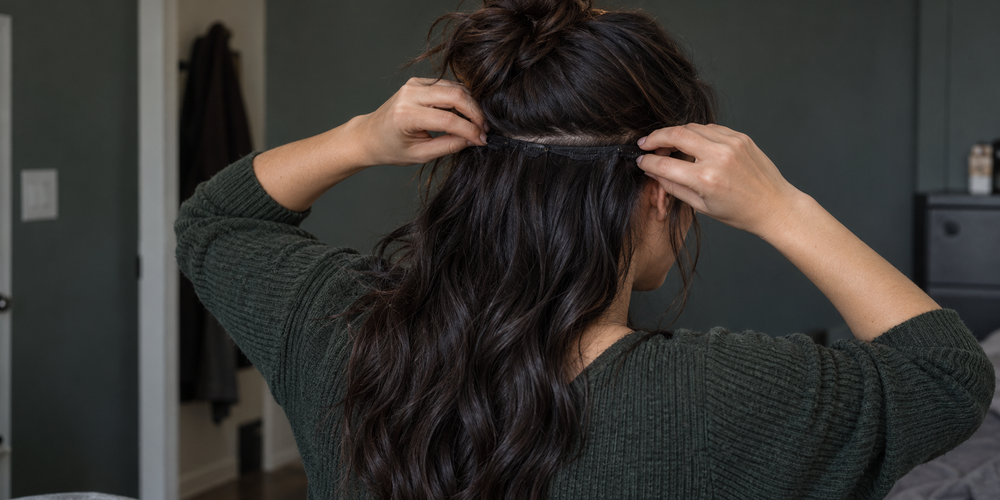
- Locate the proposed attachment area. For a back-of-head clip-in, separate the layer you would lift above the base. Keep the lower hair and the covering layer distinct.
- Measure representative strands from root to tip. Use a soft tape beside the strand without tugging at the scalp. Record the back and the shorter layers above and beside the proposed base.
- Check the natural fall as well as the number. Gently extending a wavy or curly strand helps describe its length, but its relaxed shape determines how much of the attachment it covers when worn.
For example, a hypothetical cut could have 8-inch hair at the back and 3-inch layers above the ears. The longer measurement does not tell you whether those shorter side sections can conceal the outer clips. Check both sides in a mirror before judging the whole cut by its longest point.
Can it attach, stay hidden and blend?
Look at these separately. A clip can grip securely while the base remains visible, and a hidden base can still leave an obvious line where your own hair ends.
| Check | A useful sign | What a problem suggests |
|---|---|---|
| Attachment | The clips close comfortably and stay in position during gentle head movement | Slipping, pinching or pulling means the placement or piece needs changing |
| Coverage | The released top layer covers the base from the back and both sides | Visible outer clips may mean the base is too wide for the available covering hair |
| Blending | Your ends fall into the added hair without a separate, heavy ledge | A visible short-over-long outline calls for a closer length or texture match, or a different construction |
When evaluating a piece you already own, release the covering hair fully and look from the side as well as the back. Turn your head gently. A base that disappears only when you hold your hair over it will need more than that stationary arrangement for everyday wear.
What changes for a pixie, bob or layered cut?
A cropped pixie
Closely cut sides and a short crown leave little hair to cover a wide base. Adding long hair only through the back can also leave a disconnected outline around the ears. Growing the covering sections longer is often the more practical next step for a wide clip-in. Professional strand-by-strand methods are a separate fitting decision.
If you want a finished hairstyle during that grow-out stage, follow the full-wig option in the opening table. It provides the overall cut without using those short side layers to conceal extension clips. Choose the silhouette you want, then check the wig’s cap fit separately. If this would be your first full wig, the beginner wig guide compares the cropped, straight-bob and curly-bob options.
A blunt bob
A bob may conceal clips yet leave its full perimeter visible over much longer extensions. Inspect where the bob’s ends sit against the added hair, especially at the sides. A smaller length change is generally easier to merge; very long extensions demand more work through that transition.
If blending requires cutting, decide whether you are keeping the extensions first. Have a stylist evaluate the fitted shape before removing length from your own bob or the extension. Cutting changes the piece permanently.
Longer hair with short crown layers
The back can be long while the upper layers are too short to cover a high attachment. A lower position may give more covering hair, provided the base still sits comfortably and remains concealed at its edges. Lower placement cannot supply missing side coverage. If the visible area is at the part or crown, use our guide to choosing between crown coverage and extra length before buying a clip-in weft.
Is EWIGSC’s 18-inch single piece a suitable match?
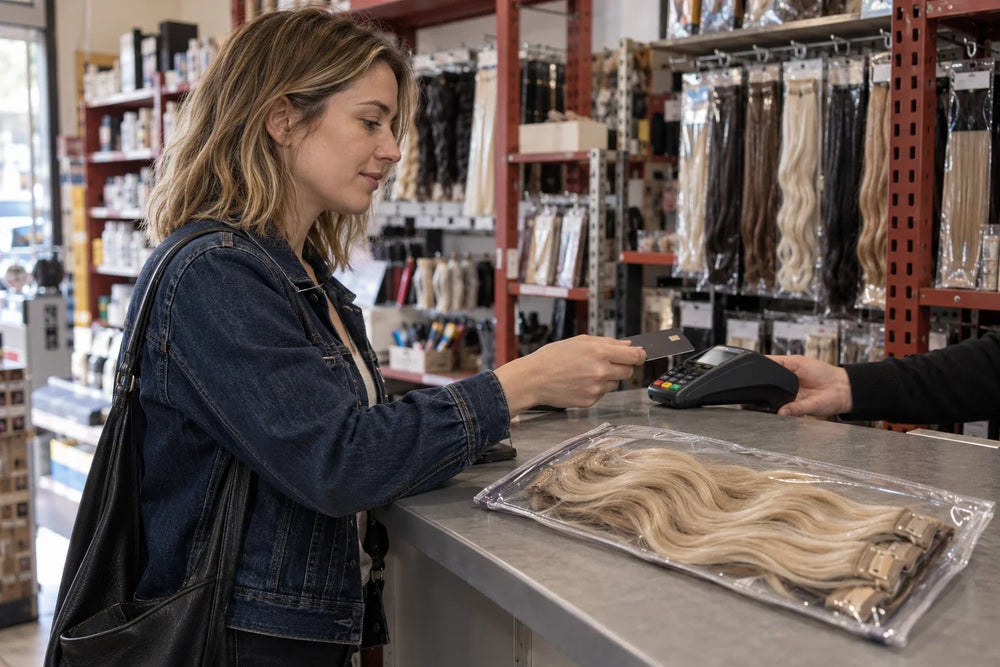
Our 18-inch wavy synthetic spider-weft clip-in has multiple clips across one wide base and weighs approximately 110 g, excluding packaging. Its soft wave runs through the lower lengths. It attaches as one piece, with the center clips secured first and the remaining clips worked outward.
It is worth considering when your own hair can cover the base across the back and sides, and its length and texture can flow into the soft wave. If you mainly want more body through an existing longer style, check the width of the area you can conceal and the texture of your ends before choosing the added length.
Choose a different construction when you need small pieces placed independently around short side layers. This single piece cannot be installed as several separate rows, and its 110 g weight does not establish suitability for fine or fragile hair. We do not assign it a universal minimum natural-hair length.
Texture matters, too. EWIGSC does not recommend curling irons, flat irons or hot blow-drying on this synthetic piece. Select it for a compatible soft-wave finish; attempting to heat-style it into a different texture adds an avoidable problem to blending. Once the piece suits your hair, our clip-in placement guide explains the fitting sequence.
If you want a removable style while your own layers grow, also plan for repeated use. EWIGSC’s expected use period for this synthetic piece is about 6–12 months with proper care, including the synthetic clip-in washing routine, or 3–6 months when the same piece is worn daily. Our hair extension lifespan guide explains replacement signs and why the useful life of the hair differs from a salon installation’s maintenance interval.
When to wait before adding extensions
Wait if the covering hair repeatedly parts to expose the base, the short sides remain disconnected from the added length, or the clips cannot sit comfortably. Longer hair alone will not resolve fragile attachment areas.
Remove a clip-in if it hurts, pulls or irritates your scalp. The American Academy of Dermatology warns that repeated tension from extensions can cause hair loss. Our guide to clip-ins and natural-hair damage covers weight and anchoring considerations in more detail.
Questions before you buy
Can you get extensions with 2 inches of hair?
Two inches is below the 3–4-inch starting guidance discussed here for clip-ins. If your hair cannot conceal EWIGSC’s whole base, wait before choosing this piece. For a complete hairstyle now, consider the full-wig options in the opening table. A specialist can assess other attachment systems separately.
Does thick hair make short extensions easier to blend?
Thicker covering hair can help hide attachments, while thick, blunt ends can make the transition to longer hair more visible. Check the outline where your own ends meet the extension. Thickness by itself does not settle the choice.
Can long hair use extensions just for volume?
Yes. Added hair can provide fullness without a dramatic length change. Compare the extension’s finished fall with your existing ends, along with its texture, base coverage and comfortable attachment. A longer label is unnecessary when your goal is simply more body.
Choose by your shortest covering layer
Use the published length ranges to narrow your options, then check the actual cut: the hair holding the attachment, the layer concealing it and the ends merging into the extension. For a wide 18-inch single piece, enough coverage across the whole base and a compatible transition matter more than one measurement taken at the back.
References & Sources
- Cliphair: How Long Does Hair Have to Be for Extensions? Method-specific starting lengths; guidance concerns that retailer’s extension range.
- Denver HairDaddy: Hair Extensions FAQ Published distinction between starting length and preferred blending length.
- American Academy of Dermatology: How to Prevent Hair Damage from a Weave or Extensions Tension, discomfort and hair-loss precautions.
- EWIGSC: 18-inch Wavy Synthetic Spider-Weft Clip-In Hair Extension Product construction, length, weight and care instructions.
Sources and product details checked October 27, 2026.
0 comments