

Clip-in extensions can damage your natural hair if their attachments pull, carry more weight than the anchoring hair can comfortably support, or catch strands during removal. Being removable lets you take them out and give your hair a break. It does not make them free of tension. Before choosing a piece, consider the hair that will hold the clips, the size and weight of the base, and how often you plan to wear it.
If a clip hurts, remove the piece. A secure fit should not require you to tolerate pain to keep the extra length in place.
Why clip-ins can cause damage without glue
The clips fasten to your own hair, which then supports the added piece. No adhesive or sewing is involved, but there is still a connection that can pull when the piece hangs, shifts or catches.
There are two concerns: strands breaking and damage to the follicles that produce hair. The British Association of Dermatologists explains traction alopecia as hair loss caused by repeated pulling. Extensions and hair clips are among the styling practices it discusses. Prolonged traction can permanently damage follicles.
That explains why the ability to unclip a piece is useful: you can end the attachment instead of leaving it in continuously. It also explains why a glue-free label alone cannot tell you whether a particular piece suits your hair.
Fine hair and thinning hair need different decisions
Fine describes the thickness of individual strands. Low density describes having fewer hairs across an area. You can have one, both or neither. For clip-ins, look at the intended attachment area as well as the overall fullness of your hairstyle.
Our minimum-length and coverage guide explains how to check the shorter covering layers. A top layer that hides the base solves a visual problem. It does not establish that the hair underneath can comfortably hold the piece. If you have to attach a wide base to a few sparse sections, or position clips at delicate edges just to conceal them, reconsider that piece.
If you’re shopping because your part or crown shows more scalp than you’d like, compare crown coverage with what a clip-in weft adds. A topper can cover that area if its clips can hold in the surrounding hair without pulling.
Compare your attachment area with these situations before choosing a piece:
| Your situation | What matters for the fit | What to do |
|---|---|---|
| Fine strands; attachment area intact | Strand thickness alone does not establish whether the base and weight suit your hair. | Compare the base and weight, then assess the fit gently. A lightweight appearance is not proof of suitability. |
| Visible breakage, thinning or soreness at the attachment area | That area already needs attention; tighter clipping does not solve the problem. | Leave clips off the affected area. Do not add extra grip to keep the piece in place. |
| Very little hair where you want coverage | An extension needs anchoring hair. Added back length and scalp coverage are different needs. | Reconsider whether a clip-in extension serves your purpose before choosing extra length or volume. |
The American Academy of Dermatology’s extension guidance recommends caring for natural hair before and between wears, protecting fragile hairline strands, and addressing pain or headaches from tight attachment. It also specifically advises removing clip-ins before washing your own hair.
Read the weight together with the base
Two useful shopping questions are “How much hair am I adding?” and “Where will my own hair hold it?” A gram figure answers the first only partly; it does not describe the placement of the clips or the condition of the strands supporting them.
EWIGSC’s 18-inch wavy synthetic spider-weft clip-in extension weighs approximately 110g, excluding packaging. It is one wide piece with multiple clips, designed to add fullness through the back and length through the ends.
That construction affects the choice. With a set of separate wefts, you can select individual pieces. With a single wide piece, you need to assess the complete base and its attachment positions together. Do not leave intended clips unsecured simply to make a wide piece fit a smaller area.

Dividing 110g by the number of clips would not establish a safe load at each attachment: the fit may not share weight equally, and different sections of your hair may provide different support. Use the specification to understand what you are adding, then assess the whole fit. A higher clip count or a higher price cannot certify suitability.
If you want removable length and waves through the back, explore the EWIGSC synthetic clip-in hair extensions collection. Compare the piece’s base with the area available for attachment as well as the length and fullness you want.
What changes if you wear clip-ins every day?
Daily use makes the repeated attachment part of the decision. Taking a piece out each night ends that session, but the same sections will be loaded again when you put it back. An occasional event and a daily routine therefore deserve different consideration.
- Remove the piece before sleep. Do not extend a day’s wear into overnight wear for convenience.
- Give your hair days without the attachment. If a piece causes discomfort, take it out rather than waiting for a scheduled break.
- Reassess the anchoring sections. A position that worked previously is not a reason to keep clipping over new tenderness or breakage.
- Do not solve slipping by forcing a tighter grip. Take the piece out and reassess whether its base and placement suit your hair.
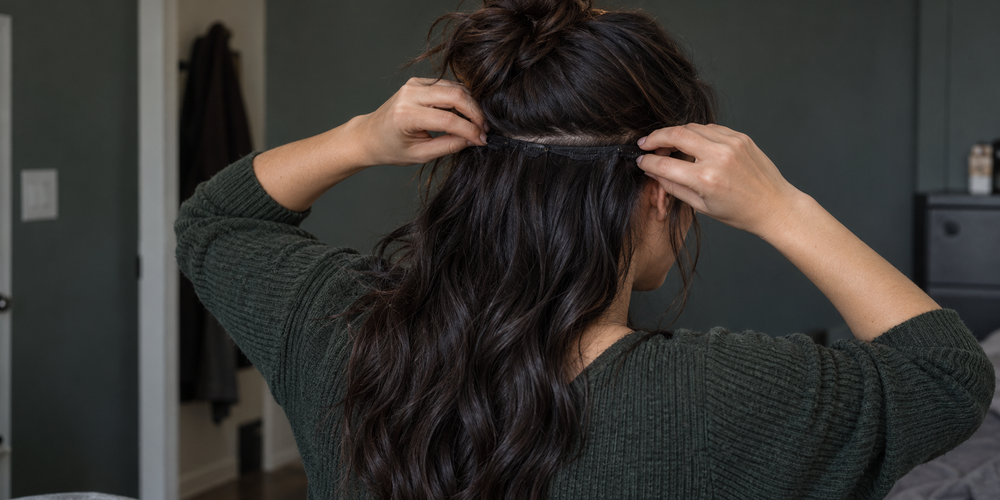
After fastening, slowly turn your head and lower your chin as you normally would. Notice whether one clip pinches, one side tugs more than the other, or the base shifts. If it does, take the piece out and reassess the placement. Do not keep pressing a clip tighter to overcome discomfort.
For positioning and removal, use the clip-in installation guide. Support the fabric edge and open every clip fully before lifting the piece away. If strands catch, pause and gently free them with your fingers while supporting the piece. Pulling downward against a closed clip can tug on the hair holding it.
Respond to changes in your hair, not just how the style looks
The AAD’s guidance on hairstyles that pull identifies pain, stinging, crusts and skin being pulled upward as reasons to change the hairstyle immediately. It also lists broken hairs, a receding hairline and patches of loss as warning signs. Do not wait for a visible bald patch before responding to discomfort.
- Pain or pulling during wear: remove the extension and avoid loading the affected area again.
- A damaged clip or base catches hair: stop using that piece. A bent fastening is a product problem to address before another wear; the extension lifespan and replacement guide explains checks for worn attachments.
- New thinning, receding edges or persistent irritation: leave the attachment off and arrange a dermatologist’s assessment. Hair loss has several possible causes, so do not assume clips are the only explanation.
Hair caught in a clip after removal cannot, by itself, tell you whether you have traction alopecia. The BAD leaflet describes diagnosis using the history and pattern of hair loss. Report where changes occur and what you have been wearing instead of trying to diagnose the cause from a few loose hairs.
Are synthetic clip-ins worse for your natural hair?
The fiber label describes the added hair. It does not describe the strength of your own hair, how the clips sit, or how much load a particular section will carry. Compare those features whether the extension is synthetic or human hair.
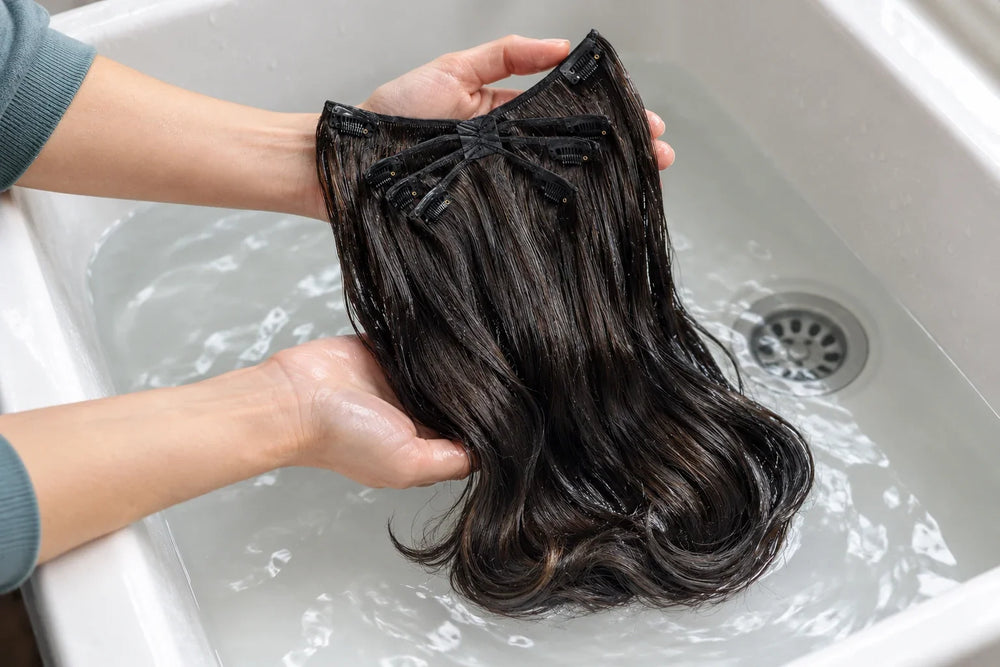
For EWIGSC’s synthetic piece, detangle gently from the ends upward and avoid curling irons, flat irons and hot blow-drying. Take the piece out for care rather than working through a resistant tangle while it is attached. Its care requirements matter when choosing a routine you can maintain.
Can clip-ins stop your hair from growing?
Repeated traction is the concern. Breakage affects the strands you can see; lasting follicle damage can affect regrowth. Taking clip-ins out does not guarantee that every kind of hair loss will reverse. If your hair is becoming visibly thinner, removing the source of pulling and getting an assessment is more useful than simply switching extension fiber.
Choose clip-ins when their attachment positions suit your hair and you can remove and care for them gently. If maintaining the style requires pain, tighter clipping or fastening over a thinning area, leave the piece off.
References & Sources
- British Association of Dermatologists: Traction alopecia. Causes, symptoms and diagnosis.
- American Academy of Dermatology: How to prevent hair damage from a weave or extensions. Natural-hair care and attachment precautions.
- American Academy of Dermatology: Hairstyles that pull can lead to hair loss. Warning signs and when to seek an assessment.
- EWIGSC: 18-inch Wavy Synthetic Spider-Weft Clip-In Hair Extension. Product weight, construction and care instructions.
0 comments