

For a first synthetic wig, choose a cut you already want to wear, a cap that fits, and a routine you can maintain without changing the style with heat. A cropped pixie is a practical starting point if you like short, swept layers. A straight bob gives you longer pieces around your face. If you want curls, buy the curl pattern you like from the start.
The best wigs for beginners suit the look you want and the amount of preparation you accept. EWIGSC’s full wigs come with pre-cut lace, clip fastening and free parting. The three examples below show how the cut and daily arranging differ once those shared features are accounted for.
First, check whether the cap dimensions suit your shortlist
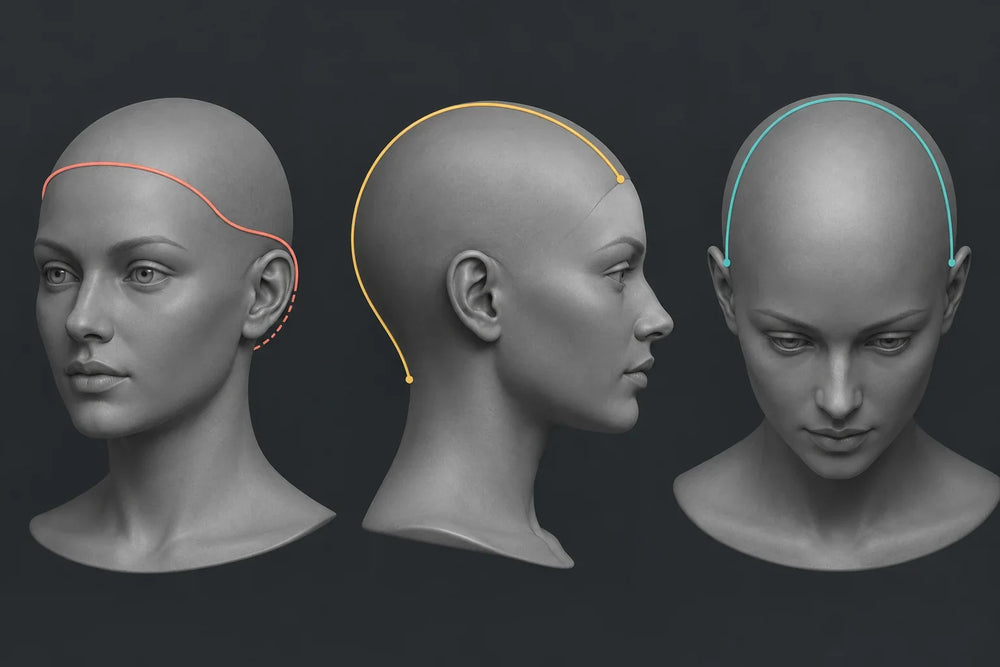
EWIGSC's eight full wigs share these listed cap measurements: 21.5 inches around, 14 inches front to back, and 13.25 inches ear to ear over the top—approximately 54.6, 35.6 and 33.7 cm. These describe the cap; they are not a guaranteed range of head sizes it will fit.
Measure with your own hair prepared as you intend to wear it beneath the wig. Compare all three dimensions. A similar circumference can still leave a difference in the front-to-back or over-the-top fit. Our wig size chart explains how to interpret those measurements alongside reference sizing.
If a cap presses painfully, will not settle into position, or leaves persistent loose areas after careful positioning, pause the purchase decision. Moving from the pixie to the bob changes the hair, but these EWIGSC styles share the same nominal cap dimensions.
Pre-cut lace, clips and free parting simplify different tasks
EWIGSC's full wigs have pre-cut lace, clip fastening and free parting. These features address three separate parts of getting ready:
- Pre-cut lace: the front lace arrives trimmed, so you can concentrate on positioning the wig instead of cutting its edge yourself.
- Clip fastening: clips secure the wig to suitable sections of your own hair. During a fit check, the attachment should hold without pulling painfully.
- Free parting: you can choose a center or side part instead of being limited to the part shown in the product photo. Arrange it gently in the direction you prefer.
These features are shared by the three styles below, so your choice can focus on the cut, front length and straight or curly texture. Changing the part shifts how the hair frames your face; the existing section lengths and curl pattern still determine the overall shape.
If there is little or no hair where clips need to grip, choose a retention method designed for that situation rather than relying on clips alone. A pre-trimmed edge simplifies preparation, but cap fit and a suitable attachment remain the first checks. Our guide to front construction explains the separate question of how the hairline is built.
Start with the shape you want to keep
Picture your ordinary morning: getting dressed, putting on glasses, arranging the hair around your face, and leaving. Would you like a short fringe, longer front pieces, or curls? That answer is more useful than choosing whichever wig looks easiest on a model.
If you want a compact everyday style, start with our short synthetic wigs. The collection includes cropped pixies and short bobs, so you can compare the shape around the ears, cheeks and nape before deciding on color.
| Style and price | Front / nape lengths | Choose it when | Everyday arranging and tradeoff |
|---|---|---|---|
| Black 3.5-inch cropped pixie $79.99 · approx. 64 g |
2.5 in / 2 in | You want a short fringe and close-cropped sides. | Guide the feathered sections with your fingers. The short front leaves little length for a different fringe shape. |
| Auburn Brown 8-inch blunt bob $158 · approx. 91 g |
8 in / 2.5 in | You want smooth, longer pieces beside the face. | Gently detangle the lengths and arrange the front. Expect more hair beside your cheeks than with the pixie. |
| Pearl Blonde 7-inch curly bob $214 · approx. 92 g |
5–7 in / 3 in | You want the supplied curls and a fuller outline around the face. | Separate and reshape individual curls with your fingers. Choose a straight style if you prefer a smooth, combed finish. |
Prices and availability checked October 29, 2026. Weights exclude packaging and have a ±2 g tolerance. Section lengths describe the cut; they do not predict exactly where it will fall on you. Weight alone cannot establish comfort or cooling.
If you prefer longer hair, a crop may feel unfamiliar even when it needs less arranging. Choose a manageable version of the look you want.
Three EWIGSC starting points, with their limits
A cropped pixie for short, feathered styling
The Black 3.5-inch Cropped Pixie has a 3.5-inch crown, 2.5-inch front and sides, and a 2-inch nape. The short front and nape create its close-cropped outline.
Consider it if you like a short fringe and a tapered outline around the ears. You can define small sections with your fingertips instead of managing longer lengths. If you want a softer, longer sweep or more side coverage, compare the shapes in our pixie wig collection before choosing the shortest crop.
The compact cut also means less room to change your mind about length. Choose this shape when a short front is part of the look you want; its lower price is a benefit only if the cut also suits you.
A straight bob for longer pieces around the face
The Auburn Brown 8-inch Blunt Straight Bob has an 8-inch front, 7-inch sides and a 2.5-inch nape. The shorter nape keeps the back compact while the front stays longer.
This is a useful starting point if you prefer a defined outline and longer front sections rather than a short fringe. Compare the front and side views in our bob wig collection: a blunt perimeter, an inward-curving classic bob and a curly bob frame the face differently, even when their length labels look similar.
The 8-inch label describes a section length, not a promise that every strand is 8 inches long or will stop at the same place on every wearer. Use the front, side and nape measurements to judge the cut. If the front already looks longer than you want, choose a different shape before planning a trim.
A curly bob when curls are part of the goal
The Pearl Blonde 7-inch Short Curly Bob has a 5–7-inch front, 7-inch crown and sides, and a 3-inch nape. The shorter nape supports the rounded curl shape.
Choose this option if you want curls around your face and are comfortable arranging them individually. Gently shake the wig, separate the sections that need attention, and guide a curl around a finger to recover its shape. Its care routine differs from combing a straight bob.
The curls are part of the purchase: choose them because you want to keep that texture. If your preferred look is smooth and straight, start with a straight bob.
Choose the maintenance you are willing to do
A preset synthetic style suits someone who wants to keep a consistent look. Traditional synthetic and heat-friendly synthetic are different fiber categories; heat instructions for one cannot be transferred to the other. For these EWIGSC styles, keep curling irons, flat irons and hot blow-drying out of the routine. Choose the supplied shape you want to maintain.
For a straight bob, plan on gentle section-by-section detangling and arranging the front. For a curly bob, use your fingers to preserve the curl groups and work on individual knots. A pixie still needs positioning, occasional cleaning and storage that protects its layers. Beginner friendly wigs need care, even when they do not need a new hairstyle every morning.
For replacement budgeting, EWIGSC's guidance is approximately 6–12 months with proper care, or 3–6 months when the same wig is worn daily. These are expected use periods, not a warranty. Persistent roughness, damaged fiber and a cap that no longer fits well also matter.
Set a budget for the whole first purchase
Among these examples, $79.99 buys the cropped pixie, $158 the blunt bob and $214 the curly bob. If you like the short fringe and its cap suits you, the pixie is the lower-cost starting point. If your goal is a longer front, paying less for a crop would leave you with the wrong hairstyle. Choose the bob shape you want within your budget.
The price difference is not a measured ease-of-use ranking. These are different designs, and the more expensive example is not automatically easier to wear or more natural on every person.
Our wig price and total-budget guide breaks down the purchase and later expenses. Include the basics you will use: a clean protective wig cap for a permitted fit check, suitable storage, and the comb or fiber-appropriate care products needed for the chosen texture. Check what is included in your order before buying duplicates. A salon trim is an optional alteration after you decide to keep the wig. These wigs use clips for attachment and arrive with the lace trimmed, so glue or lace-cutting tools do not belong on an automatic shopping list. Choose care accessories for the supplied fiber and texture.
Leave room for shipping and, if you are choosing between uncertain fits or colors, the possibility of customer-paid preference return shipping. Those costs can matter more than a small difference between two listed prices.
Compare color and fringe before you commit
There is no rule that your first wig must match your original hair color. A familiar shade can make the change feel smaller; a different shade may be exactly why you want a wig. Compare the specific product's front, side and back views, including darker roots and lighter ends. Screen lighting can change the impression of a shade, so use the wig color selection guide when narrowing two similar options.
Pay equal attention to the shortest front pieces. Ask whether you want hair across your forehead, swept diagonally, or falling beside your cheeks. A model's fringe may sit differently on you because of face proportions and cap placement. A wig with bangs can suit a beginner who likes bangs; it creates another adjustment task for someone who dislikes hair touching the forehead.
If you are choosing your first wig after 60 and want to keep a familiar haircut or visible gray, our guide to choosing wigs for women over 60 brings those preferences together with glasses, fit and daily care.
Keep the first fit check separate from alterations
Once the wig arrives, check fit, shade and the existing silhouette before cutting hair or lace, washing, styling or adding products. EWIGSC allows a brief, careful fit check using a clean protective wig cap. Keep original tags, packaging and accessories intact, and leave the supplied pre-cut lace unaltered for an eligible preference return.
Eligible returns must be requested within 30 calendar days of confirmed delivery, with approval before sending the item back. Preference-based return shipping is paid by the customer. The full returns and refunds policy explains the conditions. If you notice odor, residue, damage or an incorrect item, contact EWIGSC before attempting to clean or alter it.
Once you decide to keep the wig, our first-time wig fitting tutorial covers preparing your hair, placing the cap and checking its position. You do not need to solve every styling detail before making a sound purchase choice.
Questions before your first order
Do I need to cut a new wig?
You do not need to cut the front lace on these EWIGSC wigs: it is already pre-cut. Cutting the hair is a separate, optional alteration. First position the wig, arrange your preferred part and judge the supplied style. Decide whether to keep it before making any cut.

What should I check if I wear glasses?
During the permitted fit check, put your glasses on and check for pressure where the arms meet the cap near your ears. Look at whether the front or side pieces fall over the frames. A short cut may leave less hair beside them, but the cap and glasses still need to sit comfortably together. Our glasses fitting guide walks through level frames, side-edge pressure and removing the glasses without catching the hair.
Your next step
Start with the cap measurements, then decide whether you want a cropped fringe, longer straight front pieces or curls. Compare the relevant category, select the specific cut, and keep its first fit check free of alterations. That gives you a practical first order: a shape you chose deliberately, with a routine and budget you can live with.
References & Sources
- City of Hope, Positive Image Center: How to Choose a Wig — an overview of synthetic and human-hair fibers, styling requirements, and considerations such as wear frequency and budget.
- American Cancer Society: Wigs for Hair Loss — general guidance on measuring, fitting, and reviewing a return policy before buying.

0 comments